
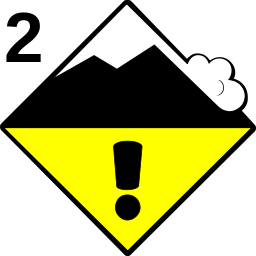
Vanoise
4 – HighSource: Météo-France
This is an AI-generated translation and summary. It may contain errors. Always read the full official Météo-France avalanche bulletin before any mountain activity.
SNOWPACK VERY POORLY STABILIZED: NUMEROUS SLABS STILL VERY REACTIVE.
WITH THE DAYTIME WARMING, NUMEROUS NATURAL RELEASES IN THE MID-MOUNTAINS.
Risk level: 4 - High
Description:
SNOWPACK VERY POORLY STABILIZED: NUMEROUS SLABS STILL VERY REACTIVE.
WITH THE DAYTIME WARMING, NUMEROUS NATURAL RELEASES IN THE MID-MOUNTAINS.
Issuance of a Special Avalanche Bulletin (CSA).
Triggered releases: numerous slabs still very sensitive to the passage of a skier. The northwest wind has contributed to forming these slabs, which are soft at the foot and base of slopes with sometimes few visual clues, and sometimes already hard when approaching ridges where the wind has been locally very strong. Given the heavy accumulations of recent snow, the crown fractures can be very thick, generally resulting in size 2 (medium) avalanches. These slabs are found on all aspects, mostly above 2000/2200 m.
An aggravating factor: above 2000 m and on cold aspects (East/North/West), and even on South aspects at high altitude, persistent weak layers buried in the snowpack may still react to the passage of a skier or in a cascade following an initial slab: they then generate larger and wider avalanches (size 3).
Spontaneous releases: with the return of the sun and the relative warming (0°C isotherm around 2000 m in the afternoon), we expect:
(1) On all aspects below 1800/2300 m, numerous glide slabs and bank slides, especially on steep, grassy slopes. Since snow depths are significant even at these mid-altitudes (100-150 cm), the volumes involved are substantial, and the resulting size 1 to 2 avalanches could affect high-altitude roads or parking lots.
(2) On South aspects up to high altitude, a few point releases in the moistening fresh snow. Generally sizes 1 (small) to 2, but an exceptional size 3 avalanche triggering the buried persistent weak layer in a cascade is not excluded.
SNOWPACK VERY POORLY STABILIZED (the layers of snow haven't bonded together yet): NUMEROUS SLABS (compacted layers of snow sitting on a weaker base) STILL VERY REACTIVE (easy to trigger).
WITH THE DAYTIME WARMING (temperatures rising above freezing), NUMEROUS NATURAL RELEASES (avalanches starting on their own without human contact) IN THE MID-MOUNTAINS.
Risk Level 4 - High: This means very dangerous conditions. Natural avalanches are likely, and human-triggered avalanches are very likely. Travel in avalanche terrain is not recommended.
Special Avalanche Bulletin (CSA): This is an official warning issued by weather services when avalanche conditions are particularly critical.
Triggered releases (avalanches caused by people): Many slabs are very sensitive to the weight of a single skier. Northwest winds have created these slabs. They can be 'soft' (friable) at the bottom of slopes, which is dangerous because they often have 'few visual clues'—meaning the snow looks normal or fluffy even though it is ready to slide. Near ridges, the snow might be 'hard' or wind-crusted because the wind was stronger there. Because so much snow has fallen (heavy accumulations), the 'crown' (the top edge where the slab breaks away) can be very deep, leading to Size 2 avalanches (large enough to bury or kill a person). These are found on all 'aspects' (the direction a slope faces, like North or South).
Persistent Weak Layers: These are 'hidden traps'—thin, fragile layers of snow (like a house of cards) buried deep underground. On cold slopes (North, East, West) or very high South slopes, these layers can collapse when a skier passes over them. This can also cause a 'cascade' (step-down) effect where a small slide triggers a much bigger one, resulting in Size 3 avalanches (large enough to destroy a car or small building).
Spontaneous releases (Natural avalanches): As the sun comes out and the '0°C isotherm' (the altitude where the temperature is exactly freezing) rises to 2000m, the snow will melt and get heavy. We expect:
- Glide slabs (plaques de fond): The entire snowpack sliding off the ground like a rug on a hardwood floor, especially on steep grass. Because there is 100-150cm of snow, these can be massive and hit roads or parking lots.
- Point releases: Small 'sluffs' of wet snow that start from a single point. These are usually Size 1 (small) to Size 2, but could trigger the deeper weak layers mentioned above.
| French | Translation & Notes |
|---|---|
| Risk level: 4 - High | Danger level: 4 - High The European avalanche risk scale goes from 1 (Low) to 5 (Very High). Level 4 means natural avalanches are likely and human-triggered ones are 'very likely'. |
| MANTEAU NEIGEUX TRÈS PEU STABILISÉ : NOMBREUSES PLAQUES ENCORE TRÈS RÉACTIVES. | Snowpack very poorly stabilized: numerous slabs still very reactive. Manteau neigeux (snowpack) refers to the total layers of snow on the ground. Plaques (slabs) are layers of cohesive snow that can slide away as a block. Réactives (reactive) means they are easy to trigger. |
| AVEC LE REDOUX EN JOURNÉE, NOMBREUX DÉPARTS NATURELS EN MOYENNE MONTAGNE. | With the daytime warming, numerous natural releases in the mid-mountains. Redoux (warming/thaw) causes the snow to lose strength. Départs naturels (natural releases) happen without human intervention. Moyenne montagne generally refers to elevations below the high alpine (roughly 1500m-2500m). |
| Émission d'un communiqué spécial avalanches (CSA). | Issuance of a special avalanche bulletin (CSA). A CSA is a high-level weather warning indicating particularly dangerous conditions. |
| Déclenchements provoqués : nombreuses plaques encore très sensibles au passage d'un skieur. | Triggered releases: numerous slabs still very sensitive to the passage of a skier. Déclenchements provoqués (triggered releases) are avalanches caused by a person, animal, or explosive. Sensibles (sensitive) means it doesn't take much weight to cause a slide. |
| Le vent de nord-ouest a contribué à former ces plaques, friables en pied et bas de pentes avec parfois peu d'indices visuels, parfois déjà dures en approchant des crêtes où le vent a localement été très fort. | The northwest wind contributed to forming these slabs, soft at the foot and base of slopes with sometimes few visual clues, and sometimes already hard when approaching ridges where the wind was locally very strong. Friables (crumbly/soft) slabs are dangerous because they don't look like typical 'wind-crust.' Indices visuels (visual clues) refers to things like dunes or scouring that warn you of wind-loaded snow. Crêtes are ridges. |
| Au vu des forts cumuls de neige récente, les cassures peuvent être très épaisses donnant généralement des avalanches de taille 2 (moyennes). | Given the heavy accumulations of recent snow, the crown fractures can be very thick, generally resulting in size 2 (medium) avalanches. Cumuls (accumulations) refers to total snowfall. Cassures (fractures/crowns) are the upper walls left where the slab breaks off. Taille 2 (Size 2) is a medium-sized avalanche. |
| On retrouve ces plaques en tous versants, plutôt au-dessus de 2000/2200 m. | These slabs are found on all aspects, mostly above 2000/2200 m. Versants (aspects/slopes) means the direction the mountain face is pointing (N, S, E, W). |
| Facteur aggravant, au-dessus de 2000 m et en versants froids (Est/Nord/Ouest), et même en Sud à haute altitude, les couches fragiles persistantes enfouies dans le manteau pourront encore réagir au passage d'un skieur ou en cascade à la suite d'une première plaque : elles engendrent alors de plus grandes et larges avalanches (taille 3). | Aggravating factor: above 2000 m on cold aspects (East/North/West), and even on South aspects at high altitude, persistent weak layers buried in the snowpack may still react to the passage of a skier or in a cascade following an initial slab: they then generate larger and wider avalanches (size 3). Couches fragiles persistantes (persistent weak layers) are dangerous snow crystals like facets or depth hoar that don't bond well and last a long time. En cascade (cascade/step-down) means one small avalanche triggers a deeper, larger layer. |
| Départs spontanés : avec le retour du soleil et le redoux relatif (isotherme 0 °C vers 2000 m l'après-midi), on s'attend à : | Spontaneous releases: with the return of the sun and the relative warming (0°C isotherm around 2000 m in the afternoon), we expect: Départs spontanés is another term for natural avalanches. Isotherme 0°C (freezing level) is the elevation where the air temperature is zero degrees; snow above this usually stays frozen, while snow below starts to melt. |
| (1) En tous versants sous 1800/2300 m, nombreuses plaques de fond et glissements de talus, surtout dans les pentes raides et herbeuses. | (1) On all aspects below 1800/2300 m, numerous glide slabs and bank slides, especially on steep, grassy slopes. Plaques de fond (glide slabs) occur when the whole snowpack slides on the ground (often grassy or smooth rock). Glissements de talus are smaller bank slides. |
| Les épaisseurs de neige étant notables dès ces moyennes altitudes (100-150 cm), les volumes mobilisés sont conséquents et les avalanches de taille 1 à 2 ainsi engendrées pourraient concerner les routes ou parkings d'altitude. | As snow depths are significant even at these mid-altitudes (100-150 cm), the volumes involved are substantial, and the resulting size 1 to 2 avalanches could affect high-altitude roads or parking lots. Notables (significant). Mobilisés (mobilized/involved) refers to how much snow is moving in the slide. Size 2 avalanches can reach roads. |
| (2) En Sud jusqu'à haute altitude, quelques départs ponctuels dans la neige fraîche s'humidifiant. | (2) On South aspects up to high altitude, a few point releases in the moistening fresh snow. Départs ponctuels (point releases) are loose snow avalanches that start at a single point and fan out (like an upside-down 'V'). |
| Généralement des tailles 1 (petites) à 2, mais une exceptionnelle avalanche de taille 3 mobilisant en cascade la couche fragile persistante enfouie n'est pas exclue. | Generally sizes 1 (small) to 2, but an exceptional size 3 avalanche triggering the buried persistent weak layer in a cascade is not excluded. Even small surface slides (taille 1) can be dangerous if they trigger a deeper, larger taille 3 slab. |
| French Term | English Term | Definition |
|---|---|---|
| Risque 4 - Fort | Risk Level 4 - High | The second-highest danger level. Natural avalanches are likely and human-triggered avalanches are very likely. Movement in avalanche terrain should be extremely limited. |
| Taille 1 | Size 1 | Small avalanche (sluff). Usually harmless to people unless it pushes them into a hazard like a cliff or a tree. |
| Taille 2 | Size 2 | Medium avalanche. Large enough to bury, injure, or kill a person. Typically travels 100m or more. |
| Taille 3 | Size 3 | Large avalanche. Can bury and destroy a car, damage a small building, or break a few trees. |
| Manteau neigeux | Snowpack | The total depth of snow on the ground, composed of various layers with different characteristics. |
| Plaque | Slab | A cohesive layer of snow that sits on top of a weaker layer; it can break away and slide as a single unit. |
| Plaque de fond | Glide slab | An avalanche where the entire snowpack slides on the ground, usually on a smooth surface like grass or rock slabs. |
| Couche fragile persistante | Persistent weak layer | A layer of snow (like surface hoar or facets) that remains unstable for a long time, often weeks, and is difficult to detect. |
| Départs naturels / spontanés | Natural releases / Spontaneous releases | Avalanches that occur on their own without a person or animal triggering them, often due to weather changes like warming. |
| Déclenchements provoqués | Triggered releases | Avalanches caused by the weight of a person (skier, snowshoer) or an external force like explosives. |
| Redoux | Warming / Thaw | A rise in temperature that causes the snow to soften and lose its internal strength. |
| Isotherme 0 °C | 0°C Isotherm / Freezing level | The altitude at which the air temperature is 0°C. Below this altitude, snow is likely to melt. |
| Versant | Aspect | The compass direction a slope faces (e.g., a North aspect). |
| Départs ponctuels | Point releases | Loose snow avalanches that start from a single point and gather more snow as they slide, forming a triangle shape. |
| Friable | Soft / Loose / Unconsolidated | Snow that is easily crumbled or broken; in this context, it refers to slabs that aren't yet hard or wind-crusted. |
| En cascade | Step-down / Cascade | When the collapse of one snow layer triggers a deeper, larger layer beneath it. |
Download the original Météo-France bulletin in French (PDF).
Download original PDF (French)